Parking Jam: Car Parking Games
TapNationStrategy
4.45.92K Reviews
- Version
- 6.15.0
- Installs
- 10.00M
- Age Rating
- Mature 17+
Screenshots
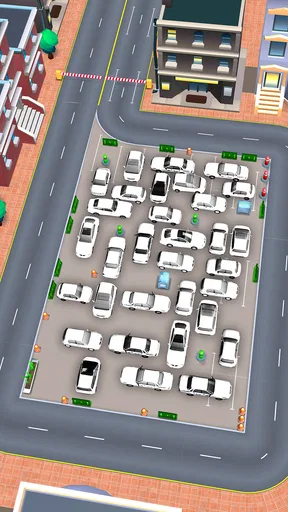
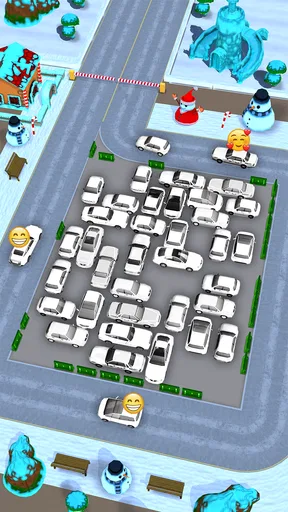
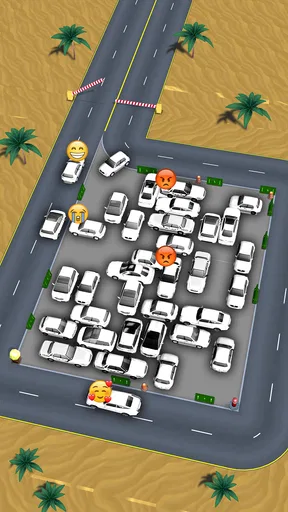
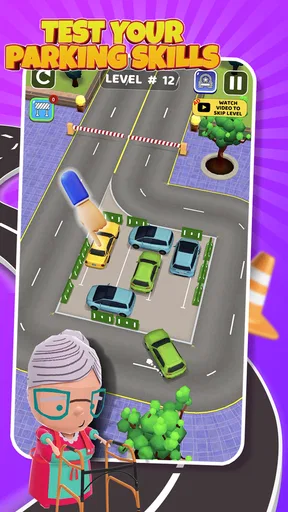
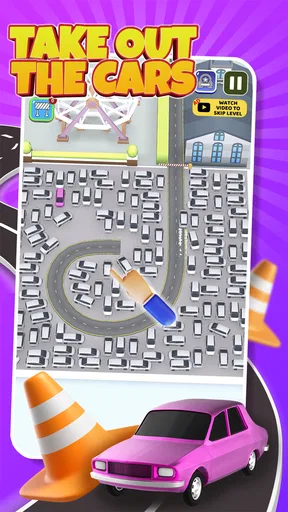
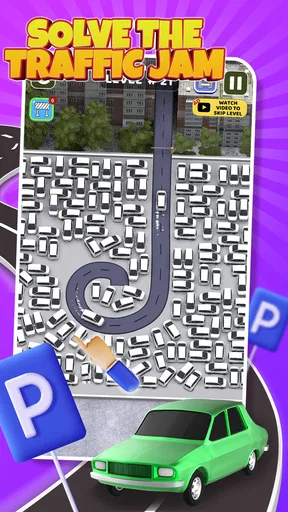
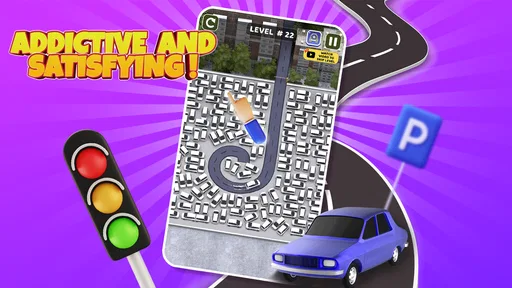
Our Review of Parking Jam: Car Parking Games
 Analysis by Appyee
I first understood the appeal of Parking Jam: Car Parking Games when I made what looked like an easy move and immediately blocked the exit. The board presents a crowded parking area, and the basic task is to move cars in the right order so the jam clears. That sounds simple, but the satisfying part comes from reading the layout before touching anything, spotting which vehicle has a clean path, and accepting that one careless move can turn a nearly solved puzzle into a mess.
This is a free strategy game from TapNation, built around short car-parking puzzles rather than racing or realistic driving. Its store summary describes the central challenge accurately, but it does not quite capture the small decisions that make each board feel different. I am not steering through traffic or competing against another driver. I am solving a compact spatial problem, watching the board open up, and deciding whether I can finish cleanly or should restart before making the situation worse.
The game is available for players using Android 7.0 or later, carries a Mature 17+ content rating, and has reached over ten million installs. Its average rating is 4.4 from around sixty-nine thousand ratings, which fits my impression: the concept is immediately approachable, and the quick puzzle format works well for people who want something they can play in small pieces rather than commit to a long campaign.
How the parking puzzle loop works in practice
I approach each board as a small planning problem rather than a test of how quickly I can move cars. In this section, I focus on how to read the layout, recognize when a move has made progress, and tell a useful mistake from a dead end. That practical rhythm also explains why a reset can be part of solving the puzzle, not simply a setback.
The first move is really a reading exercise
The most important action is not dragging a car. It is scanning the board. I look for vehicles that can leave without crossing another car, then check whether moving one of them will create space for a second vehicle. That habit makes the opening feel less random. A board may contain several cars that appear ready to move, but only one may be useful because it unlocks the lane needed by everything behind it.
The controls are easy to understand, which helps the game get to its real question quickly: can I identify the correct order? The car-parking theme gives the puzzle a familiar visual language, but the challenge is closer to a sliding-path logic problem than to a driving simulator. There is no need to learn acceleration, steering, or braking. My attention stays on direction, obstruction, and the consequences of each choice.
That simplicity also exposes mistakes clearly. If I pull a vehicle into the wrong space, I can see how it interferes with the remaining cars. The board does not need a complicated tutorial to explain the lesson. I learn it by watching a promising route disappear. For new players, my advice is to resist the urge to move the most obvious car first. The obvious move is often useful, but not always the best opening.
Feedback arrives after every decision
The feedback rhythm is the strongest part of the design. I make a move, the arrangement changes, and I immediately know whether I have improved the position. A car leaving the lot creates visible breathing room. A bad move creates a new blockage. That quick cause-and-effect relationship makes the puzzles easy to understand even when the solution is not obvious.
I especially like that the game turns progress into a visual process. Instead of waiting for a complicated calculation or a long animation, I can watch the crowded area become more manageable. The reward is not only reaching the end of a level. It is also the moment when a previously trapped car suddenly has a route because I cleared the right space two moves earlier.
This rhythm makes the game suitable for short breaks. If I have only a few minutes, I can attempt a puzzle, make progress, and stop without losing the basic idea of what I was doing. It is also a reasonable choice for a relaxed evening when I want a small mental challenge without the pressure of a competitive match. The experience is active enough to hold my attention, but quiet enough to play in a low-energy mood.
There is a useful distinction between a mistake that teaches me something and a mistake that merely wastes time. In this game, the former happens when I move a car and discover that I misunderstood the board. I can then rethink the order. The latter happens when I continue making random moves after the position is already hopeless. The game rewards a player who recognizes that difference and resets instead of stubbornly trying to repair every bad decision.
Why clearing one car feels like a reward
The reward structure is deliberately modest. I am not playing for a deep character build, a racing career, or a large strategic economy. The immediate prize is the board becoming less crowded and the puzzle reaching a successful conclusion. That narrow focus is exactly why a solved level can feel satisfying: the reward is tied directly to the reasoning that produced it.
For me, the best moments come when the solution is not obvious at the start but becomes clear after one carefully chosen move. Removing a car can reveal a lane, which makes another car movable, which then opens the exit for a third. The pleasure comes from recognizing the chain before it is complete. It feels like untangling a knot one strand at a time.
The game also works as a small concentration exercise. I sometimes play it while waiting for an appointment or during a break when I want to replace passive scrolling with something that asks for a little attention. The puzzles are more useful in that situation than a full racing game because I can pause mentally between moves. I do not need to remember a long sequence of events or maintain a fast reaction speed.
However, players looking for a strong sense of progression may find the reward loop limited. The satisfaction is primarily puzzle-based. If your favorite strategy games are built around collecting resources, upgrading units, or developing a long-term plan, the compact parking boards may feel too narrow. This is a game about solving the current arrangement, not building a persistent empire.
Resetting is part of the strategy, not a failure
The reset moment is central to the experience. Once I have filled the board with awkwardly positioned cars, trying to rescue the puzzle can become less productive than starting over. A restart gives me a clean view and lets me apply what I learned. I now know which opening move caused trouble, which car should have been left alone, and where the real bottleneck was.
This creates a useful action-feedback-reset cycle. I act, observe the result, decide whether the position remains workable, and either continue or begin again. The reset has value because the information from the failed attempt carries over, even though the board returns to its original state. That makes failure feel less punishing than in games where one mistake ends a long run.
My practical tip is to reset earlier than you might expect when two or more cars are blocking each other and no clear exit route remains. Continuing can encourage random dragging, which teaches very little. A restart is more efficient when you can name the mistake and test a different order immediately. On the other hand, I would not restart after every imperfect move. Some puzzles look worse for a moment before the correct opening becomes useful, so I give the position a short chance to reveal whether the new space is actually helping.
This is also where the game differs from a conventional driving title. In a racing game, recovering from a mistake may mean losing time while still pushing forward. Here, the board itself is the opponent. Resetting is not abandoning a race; it is choosing a better line of reasoning. That makes the game more forgiving for careful thinkers and less appealing to anyone who wants the excitement of continuous motion.
Where the free model affects the experience
The game is free to download, with in-app purchases ranging from forty-nine cents to eighty-nine dollars and ninety-nine cents per item. That range matters because a player should approach the game knowing that optional spending can sit beside the basic free experience. I recommend treating purchases as a personal boundary rather than assuming that every available item is necessary to enjoy the puzzles.
For a casual player, the most sensible approach is to begin without spending and see whether the core loop holds attention. If the short boards, quick feedback, and restart-based learning are already enjoyable, the game has done its job without requiring a purchase. If the experience becomes frustrating because progress depends on something you do not want to buy, that is a good point to stop rather than spend automatically.
I would also keep expectations realistic about the Mature 17+ rating. The rating is part of the product information a parent or younger player should notice before installing. Even though the central activity is arranging cars, the age label means this is not a title I would casually hand to a child without checking the current store presentation and device settings first.
Who will enjoy it, and who should choose something else
This is a strong fit for people who enjoy visual logic puzzles, tidy-up challenges, and games that can be understood in seconds but still demand planning. It suits commuters, students between tasks, and anyone who likes the feeling of turning a cluttered arrangement into an orderly one. It is also friendly to players who prefer thinking time over reflexes, because success depends more on sequence and spatial awareness than on rapid tapping.
I would recommend it to a friend who says, “I want something simple, but not mindless.” The controls are approachable, yet random movement quickly exposes its limits. The game gives enough resistance to make a solved board feel earned without requiring a long tutorial or a complicated rulebook.
I would not choose it for someone seeking realistic parking practice. The cars and parking spaces provide the theme, but this is not a substitute for learning road positioning, reversing, or judging real-world distances. I would also point competitive players toward a multiplayer strategy game or a racing game if they need opponents, rankings, or constant pressure. Here, the challenge is private and self-paced.
Compared with match-three games, the satisfaction is less about creating chains and more about preserving future options. Compared with classic sliding-block puzzles, the parking setting makes the objective immediately readable and gives each move a more concrete purpose: clear the jam. Compared with idle or management games, there is little long-term accumulation. The trade-off is focus. I get a cleaner puzzle loop, but not the broader systems those alternatives provide.
Small habits that make difficult boards easier
My first useful habit is to identify the exit route before moving anything. I then ask which car is occupying the critical lane, rather than simply looking for a car that can move right now. A vehicle with a clear path may be irrelevant if it does not open the area where the real blockage sits.
My second habit is to preserve flexible spaces. Once a car is moved into an empty area, that space can become either a temporary staging point or a new obstruction. I try not to fill the only useful gap too early. Leaving room around the most constrained cars often gives me more options than clearing a less important vehicle.
My third habit is to distinguish progress from activity. Moving several cars does not necessarily mean I am closer to solving the board. I look for a measurable change: has the exit become accessible, has a trapped car gained a route, or has the number of blocked lanes decreased? If the answer is no, I reconsider the sequence instead of dragging another vehicle just to keep moving.
These habits are not complicated, but they change the tone of play. Without them, the game can feel like trial and error. With them, each attempt becomes a small planning session. That is the hidden strength of the format: the board is simple enough to read, yet structured enough to reward a disciplined approach.
What to expect from the current release
The current version is 6.15.0, and the game remains positioned as a free strategy title rather than a premium one-time purchase. That makes it easy to try, especially for someone who wants to test the loop before committing to a larger download or a paid puzzle collection. The broad install base also suggests that the concept has found an audience beyond dedicated puzzle fans.
Still, popularity does not remove the personal trade-offs. The experience depends on whether you enjoy repeating a board after a poor sequence. Some players will find that repetition calming and constructive. Others will see it as a sign that the game is too narrow. I fall between those reactions: I like restarting when I can learn from the attempt, but I lose interest when a session feels like repeating the same basic action without a new decision.
Battery, storage, and device performance are not the reasons I would choose this game. I choose it for the compact mental loop. If your priority is a rich visual spectacle, a story, or a large collection of strategic systems, this is not the right destination. If your priority is a quick puzzle that turns a parking jam into a sequence of readable choices, it makes much more sense.
My verdict on the complete loop
Parking Jam: Car Parking Games succeeds because its action, feedback, reward, and reset all support the same idea. I choose a car, see the parking area change, enjoy the moment when a route opens, and restart when my order has created an unsalvageable blockage. That loop is easy to enter and surprisingly effective at making one more attempt feel worthwhile.
The game is not a full strategy experience, and I would not pretend that its parking theme turns it into a driving simulator. Its strengths are narrower: immediate rules, visible consequences, short sessions, and puzzles that reward planning over speed. Its weaknesses come from the same focus. Players who want deeper progression, competition, or realistic vehicle control should look elsewhere, while players who dislike restarting may find the central rhythm repetitive.
For me, the best use case is a spare five or ten minutes when I want to wake up my attention without starting a demanding game. I can begin with one cautious move, learn from a mistake, and either clear the board or reset with a better plan. That is a small promise, but the game keeps it consistently enough that I would recommend giving it a try—especially if the idea of untangling a crowded parking lot sounds more satisfying than racing through one.
Verdict
Strengths of Parking Jam: Car Parking Games
- Simple controls make it easy to start playing immediately.
- Short levels are ideal for quick gaming sessions.
- Increasing difficulty provides a satisfying sense of progression.
- Colorful visuals and clear car designs improve readability.
- Works well for players who enjoy casual puzzle challenges.
Limitations of Parking Jam: Car Parking Games
- Some levels can feel repetitive after extended play.
- Later puzzles may require trial and error rather than planning.
- Frequent ads may interrupt the gameplay experience.
- Mistakes can be frustrating when several cars block each other.
- Progression may feel slow without optional in-app purchases.
Other Releases by TapNation
View All
Thief Puzzle: to pass a level
Puzzle4.6

Guess Their Answer - IQ Games
Trivia4.4

Hoop World: Flip Dunk Game 3D
Sports4.7

Cornhole League - Board Games
Sports4.3
Similar Picks in This Category
View All
Clash of Clans
Supercell4.5

Plants vs. Zombies™
ELECTRONIC ARTS3.7

Lords Mobile: Kingdom Wars
IGG.COM4.5

Clash Royale
Supercell4.4

State.io — Conquer the World
CASUAL AZUR GAMES4.1

Car Driving School : Car Games
Spark Game Studios3.9
Frequently Asked Questions
What is Parking Jam: Car Parking Games?
Parking Jam: Car Parking Games is a puzzle game focused on organizing cars in crowded parking areas. Your objective is to move vehicles in the correct order, clear the traffic jam, and guide every car out without causing collisions. As the levels progress, the layouts become more complex, requiring careful planning, patience, and attention to the available escape routes.
How do you play Parking Jam: Car Parking Games?
Gameplay is based on simple touch controls. You tap or swipe cars to move them when their path is clear, then gradually open space for the remaining vehicles. The main challenge is deciding which car should leave first, since moving one vehicle too early can block another. Later stages may include tighter spaces, obstacles, and more complicated parking arrangements.
Is Parking Jam: Car Parking Games suitable for children?
The game is generally easy to understand and does not require advanced reading or complicated controls, making it accessible to many younger players. However, parents should review the app’s age rating, advertising, in-app purchase options, and privacy information before installation. Difficulty can also increase noticeably, so younger children may need help with the more challenging puzzle levels.
Does Parking Jam: Car Parking Games require an internet connection?
Many parking puzzle games can be played offline after installation, which is useful when traveling or when you have limited mobile data. Nevertheless, certain features—such as advertisements, rewards, special events, cloud synchronization, or promotional content—may require an internet connection. Availability can vary by version and device, so it is best to test the game after downloading it.
Are there ads or in-app purchases in Parking Jam: Car Parking Games?
The game may include advertisements, particularly between levels or when you choose optional rewards, and it may offer in-app purchases for removing ads, unlocking content, or obtaining extra tools and bonuses. The exact options can differ between Android and iOS releases. Before playing, check the store listing and device purchase settings, especially if children will use the app.
Play our best games!


